
How Shared Office Spaces Help in Networking and Business Growth
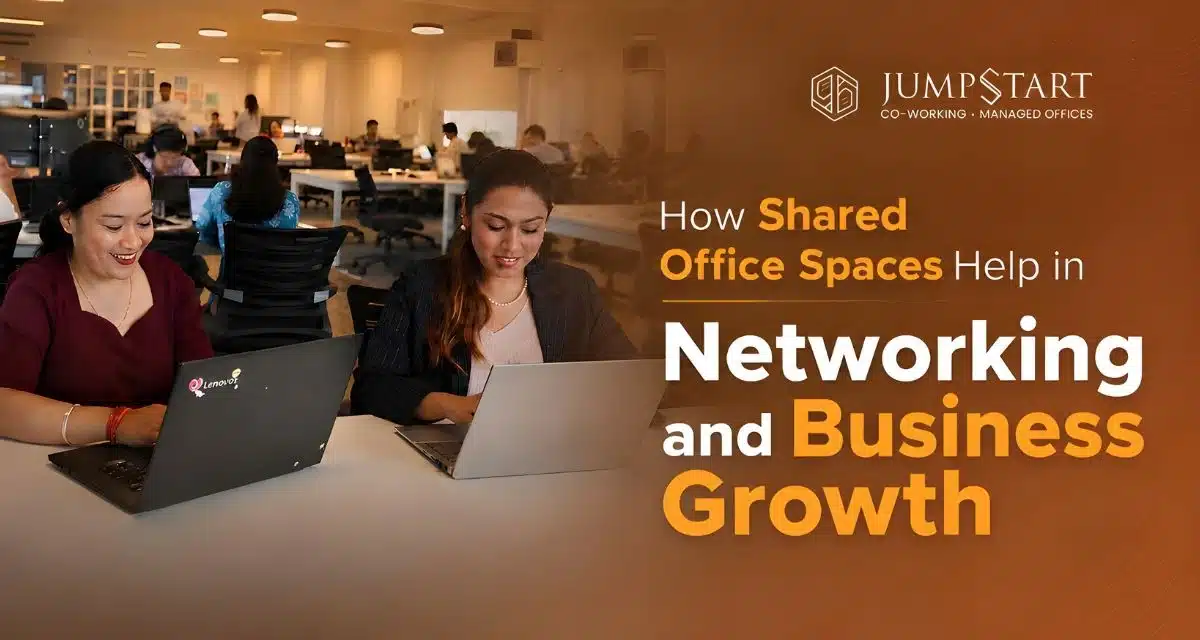
The way people work has changed in ways most of us didn’t quite see coming. Not too long ago, having an office meant signing a long lease, buying furniture, setting up the internet and then starting the operations. That model worked for a while, until it didn’t.
Today, everything has moved on. Businesses are no longer just asking “where will we work?” They’re asking, “Who will we work around?” And that shift in thinking is exactly why shared office spaces have gone from a niche experiment to a genuinely compelling option for professionals across the board.
Whether you’re building a startup from scratch, freelancing between projects or running a growing team that needs more than a home setup, the appeal of working in a space alongside other driven, curious, entrepreneurial people is hard to ignore.
What Actually Makes Shared Office Spaces Different?
Let’s be honest about what a traditional office often is: a group of people from one company, sitting in the same building, rarely speaking to anyone outside their own floor. It’s efficient in some ways but it’s also a bit of a bubble.
Shared office spaces work differently. On any given day, you might find a two-person SaaS startup sitting next to a seasoned consultant, a design agency across the hall and a remote team using the meeting room for their weekly check-in. The mix is almost never predictable and that’s the whole point.
When you strip away the standard layouts and replace them with open, flexible environments, something interesting starts to happen. People talk. They ask questions. They overhear problems they’ve already solved and offer to help. It’s not forced networking; it’s just what happens when curious professionals share the same kettle and WiFi password.
How Shared Office Spaces Facilitate Networking and Business Growth
Networking That Doesn't Feel Like Networking
Most people cringe a little at the word “networking.” It brings to mind awkward events with name tags, rehearsed elevator pitches and business cards that end up at the bottom of a bag. That version of networking exists but it’s not particularly effective.
What shared work environments offer instead is something quieter and far more valuable: consistent, contextual interaction.
You run into the same people every day. You know what they’re working on. You’ve grabbed coffee together at odd hours. And when the moment comes where one of you can genuinely help the other with a referral, a recommendation, a connection — it happens naturally because the relationship already exists.
Over time, these small moments tend to compound. A conversation that starts with “what do you actually do?” can become a referral, a collaboration or even a long-term client relationship. This kind of natural connection is one of the real shared workspace benefits that doesn’t get talked about enough precisely because it doesn’t feel like work.
A Collaborative Environment Does Something to Your Thinking
There’s a practical advantage to working around people from different industries that’s easy to underestimate until you experience it.
When you’re working in a traditional office, surrounded by colleagues from your own field, it’s easy to think within familiar frameworks. Everyone’s dealing with similar challenges. Solutions start to look the same.
But when you put a tech founder next to a brand strategist or a freelance writer beside a logistics consultant, the conversations start going to unexpected places. You get pushed to explain your ideas clearly to someone who doesn’t share your jargon. You hear about problems from a completely different industry and realise, halfway through the conversation, that you’ve already solved a version of that problem yourself.
This kind of cross-pollination isn’t incidental; it’s genuinely useful. Businesses in collaborative environments tend to think more creatively, adapt more quickly and identify opportunities they might have otherwise missed.
Ideal Office Space for Startups
Early-stage businesses face a particular tension: they need to look professional, operate efficiently and keep costs manageable, all at the same time. That’s a tough combination to pull off with a traditional lease.
This is why a shared setup makes perfect sense as an office space for startups in Dehradun, offering flexibility, affordability, and a professional work environment. Rather than committing to a fixed space and a fixed overhead, startups can focus their energy and resources on the things such as building products, acquiring customers and hiring the right people.
The infrastructure is already there. The internet works. The meeting rooms are bookable. The address is professional. And most importantly, the space can grow with the business. You start with a desk or two and when the team expands, you scale up rather than relocate. That kind of flexibility removes one category of problem entirely which at an early stage is exactly what a founder needs.
Beyond the logistics, there’s also the matter of the environment. Being surrounded by other people who are building things, solving problems and pushing through hard days has a way of keeping your own motivation sharp.
Learning Opportunities Through Community
One of the quieter advantages of working in a shared space is how much you pick up without trying.
Most well-run coworking spaces host a steady rhythm of events like workshops, panel discussions, skill-sharing sessions and community meetups. Some of these are formal with speakers and slides. Others are more informal like someone mentioned they’ve figured out a new way to run client onboarding and suddenly there’s a small group gathered around a whiteboard.
This kind of learning opportunity adds up. Over months, you’ll find you’ve developed a much better understanding of industries adjacent to your own. You start to see your work in a broader context. That’s useful in ways that are hard to quantify but very easy to feel.
Better Visibility for Businesses
Here’s something that doesn’t get mentioned enough: being part of a shared workspace puts your business in front of an audience that’s already inclined to care.
The people working around you are professionals. They have budgets, projects and contacts. If they understand what you do and they’ve seen your work firsthand, they’re far more likely to recommend you to someone in their network than a stranger would be.
This internal visibility is different from social media reach or paid advertising. It’s relationship-driven which means it tends to be more durable. A recommendation from someone who’s worked near you for six months carries a very different kind of weight than a Google ad.
Room to Grow Without the Headaches
Business growth rarely follows a straight line. Sometimes a team triples in six months. Sometimes a project wraps up and you need to scale back. Traditional office leases don’t accommodate this gracefully.
Shared workspaces do. Most offer a range of setups from hot desks and dedicated spots to private cabins and fully managed office suites. If your requirements change, you adjust. No moving company required, no new lease to negotiate, no infrastructure to rebuild.
This flexibility isn’t just convenient; it genuinely reduces the administrative drag that can slow growing businesses down. One less thing to manage means more attention on the things that matter.
Conclusion
Modern businesses need more than infrastructure. They need environments that encourage collaboration, flexibility and growth. This is why shared office spaces are becoming an important part of today’s business ecosystem.
The value of these spaces lies not only in cost efficiency or convenience but in the opportunities they create. Networking, collaboration, knowledge exchange and community interaction all contribute to stronger and more sustainable business growth.
This is also the philosophy reflected in the way Jumpstart Coworking Hub approaches workspaces. Located on Haridwar Bypass Road, Jumpstart offers accessible, professionally designed spaces for professionals, startups, freelancers and growing teams. The infrastructure is solid: high-speed internet, modern breakout areas, bookable meeting rooms and reliable support — everything you need to hit the ground running.
What Jumpstart offers across its range of workspace options is an environment designed to make it easier for people to do good work, meet interesting people and grow alongside a community of professionals who are all working toward something.
So if you’re at a point where your current setup is holding you back or you’re just ready for something that matches the ambition of what you’re building then it’s worth visiting Jumpstart to learn more.
Read more: Why Professionals Are Choosing Coworking Over Home Offices